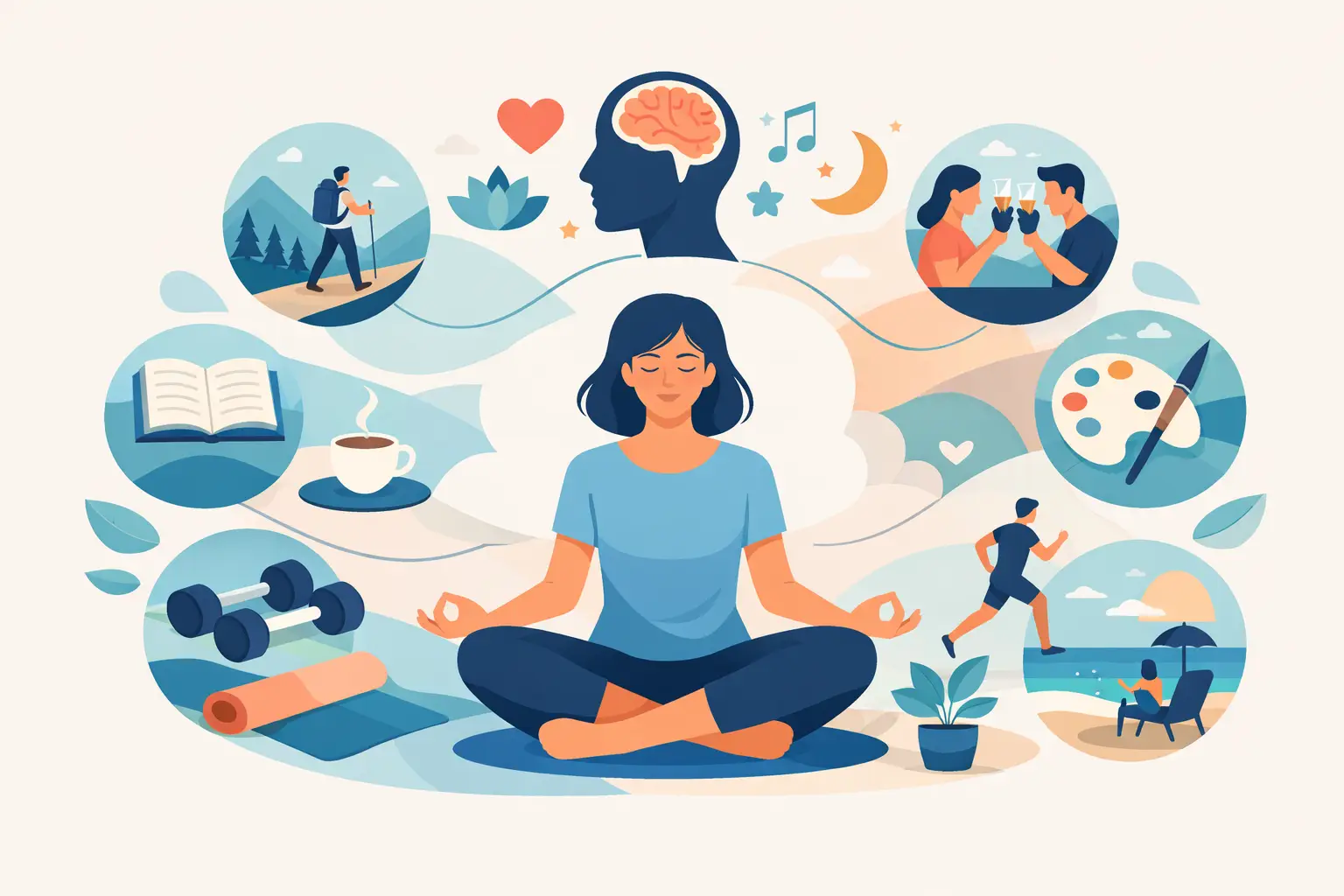
A packed calendar can look like a full life while leaving very little room to feel well within it. The best activities for psychological wellbeing are not necessarily the most impressive, expensive, or time-consuming. They are the practices that help you regulate stress, strengthen relationships, experience competence, and reconnect with what matters to you.
Positive Psychology offers a useful lens here: wellbeing is more than the absence of distress. It also includes positive emotion, engagement, relationships, meaning, and accomplishment. No single activity reliably supports every one of these areas, which is why a balanced approach tends to be more helpful than searching for one perfect habit.
What makes an activity good for wellbeing?
An activity supports psychological wellbeing when it does more than distract you from a difficult day. It may settle an activated nervous system, create a sense of progress, invite genuine connection, or remind you that you have choice and agency. Often, the most effective practices are small enough to repeat when life is busy.
Your needs also change. A solitary walk may be restorative after a demanding meeting, while a conversation with someone you trust may be what helps after a lonely week. Think of these activities as a personal wellbeing menu, not another performance standard to meet.
12 best activities for psychological wellbeing
1. Move your body in a way you can sustain
Movement can shift your state remarkably quickly. A brisk walk, gentle yoga class, bike ride, strength session, or even ten minutes of stretching can help release physical tension and improve mood. The psychological benefit is not limited to fitness. Keeping a commitment to move also builds self-trust.
Intensity is not the point. If hard exercise leaves you depleted or becomes another source of pressure, choose something kinder and more realistic. A walk outside during daylight can be especially supportive when your work keeps you indoors for long stretches.
2. Spend unhurried time in nature
Natural environments give the attention system a different kind of task. Instead of continually filtering notifications, noise, and demands, your mind has space to rest on leaves moving in the wind, changing light, or the rhythm of your steps. This can reduce mental fatigue and create a welcome sense of perspective.
You do not need a mountain trail to benefit. Sit in a park at lunch, tend a plant, walk near water, or take the longer route home through a tree-lined street. The value often lies in being present enough to notice your surroundings, rather than treating nature as another backdrop for multitasking.
3. Protect sleep with a calming evening rhythm
Sleep affects emotional regulation, concentration, patience, and resilience. When sleep is consistently disrupted, everyday frustrations can feel far larger than they are. A perfect routine is unnecessary, but a few reliable signals can help your mind and body transition out of the day.
Try dimming lights, putting your phone away before bed, reading a few pages, taking a warm shower, or writing down tomorrow's first task so it does not keep circling in your thoughts. If persistent sleep difficulties are affecting your daily life, professional support is worth considering.
4. Have one honest conversation
Meaningful connection protects wellbeing, but it does not require a large social circle or constant social plans. It requires moments where you can be known without having to edit every feeling into something more acceptable. A short, candid check-in with a friend, partner, sibling, or colleague can reduce isolation and deepen trust.
Be specific when you reach out. Rather than saying, “We should catch up sometime,” try, “I have had a difficult week. Do you have twenty minutes to talk?” Equally, make room to ask a sincere question and listen without rushing to solve the answer.
5. Practice gratitude with precision
Gratitude is sometimes mistaken for forced positivity. Done well, it is not denial of hardship. It is the practice of noticing what is still supportive, meaningful, or good alongside what is hard.
At the end of the day, name one specific thing that helped: a coworker who made a task easier, the taste of your morning coffee, a body that carried you through a stressful day, or a boundary you kept. Specificity matters because it trains attention toward real experiences rather than vague optimism.
6. Do something that absorbs your attention
Psychological wellbeing needs more than relaxation. It also needs engagement: the satisfying experience of being fully involved in an activity that is challenging but manageable. This is often called flow.
Cooking a new recipe, playing music, gardening, drawing, learning a language, building something, or solving a problem can create this state. Choose an activity with enough structure to hold your attention and enough room to develop a skill. Passive scrolling may offer relief in the moment, but it rarely provides the same sense of participation or growth.
7. Make progress on a meaningful goal
Accomplishment does not have to mean chasing bigger titles, higher income, or constant optimization. It can mean finishing a course module, organizing a difficult document, training for a 5K, or taking one administrative step you have avoided. Progress strengthens a sense of efficacy: the belief that your actions can influence your life.
Keep goals small enough to begin. When you are overwhelmed, “work on my career” is too broad, while “spend fifteen minutes updating my resume” is concrete. Motivation often follows action, not the other way around.
8. Offer help without overextending yourself
Contributing to another person or a wider community can create meaning and reduce the feeling that life is only a series of individual demands. This might be checking on a neighbor, mentoring someone, volunteering, sharing a useful skill, or simply giving a colleague your full attention.
The trade-off is important. Helping becomes less nourishing when it is driven by guilt, resentment, or a pattern of abandoning your own needs. Generosity supports wellbeing when it comes with boundaries, not when it becomes proof that you deserve care.
9. Write to understand your experience
Writing can turn a vague emotional fog into something more workable. You might journal freely for ten minutes, complete the sentence “Right now, I need...,” or write about a difficult event from the perspective of a compassionate friend. The goal is not polished insight. It is emotional clarity.
For some people, writing about distress can initially intensify feelings. If that happens, keep the practice brief and end by grounding yourself in the present: name what you can see, choose one next step, or write about a source of support. If painful experiences feel overwhelming, a therapist can offer a safer structure for processing them.
10. Create a boundary that protects your energy
Wellbeing is shaped not only by what you add, but also by what you stop allowing. A boundary may mean declining an extra commitment, taking your lunch break away from your desk, muting a group chat, or deciding that work messages can wait until morning.
Boundaries can feel uncomfortable because they may disappoint someone or challenge old habits. That discomfort does not automatically mean the boundary is wrong. A clear, respectful limit can protect the attention and energy you need for relationships, rest, and work that genuinely matters.
11. Use a brief mindfulness practice
Mindfulness is the skill of returning attention to the present with openness rather than judgment. It is not about eliminating thoughts or feeling calm on command. A two-minute pause to notice your breathing, your feet on the floor, and the sensations around you can interrupt automatic stress reactions.
This practice is especially useful before a difficult conversation, after receiving upsetting news, or when you notice yourself spiraling into prediction and self-criticism. If stillness feels frustrating, try mindful walking or focus on the physical steps of making tea.
12. Make room for play and pleasure
Adults often postpone enjoyment until every task is complete, which means it may never arrive. Pleasure is not frivolous. Laughter, music, dancing in the kitchen, a game with friends, a favorite film, or time with a pet can restore positive emotion and remind you that you are more than your responsibilities.
Choose pleasures that leave you feeling more like yourself afterward. There is no moral score attached to how you rest. The question is simply whether the activity helps you return to your life with more energy, warmth, or ease.
Build a wellbeing rhythm, not a perfect routine
Trying all twelve activities at once is likely to create the very pressure you are trying to reduce. Start by choosing one activity that supports your body, one that supports connection, and one that supports meaning or growth. Repeat them for a few weeks, then notice what changes in your mood, energy, and sense of agency.
Live Like Jay approaches growth as an ongoing practice, not a checklist for becoming a different person. Your wellbeing plan should be flexible enough to meet real life: demanding work periods, family responsibilities, low-energy days, and seasons when you need more support.
The most helpful next step may be surprisingly small. Take a ten-minute walk, send the honest message, or make tonight a little quieter than usual. A steadier life is often built through these modest moments of care, repeated until they begin to feel like a way of living.