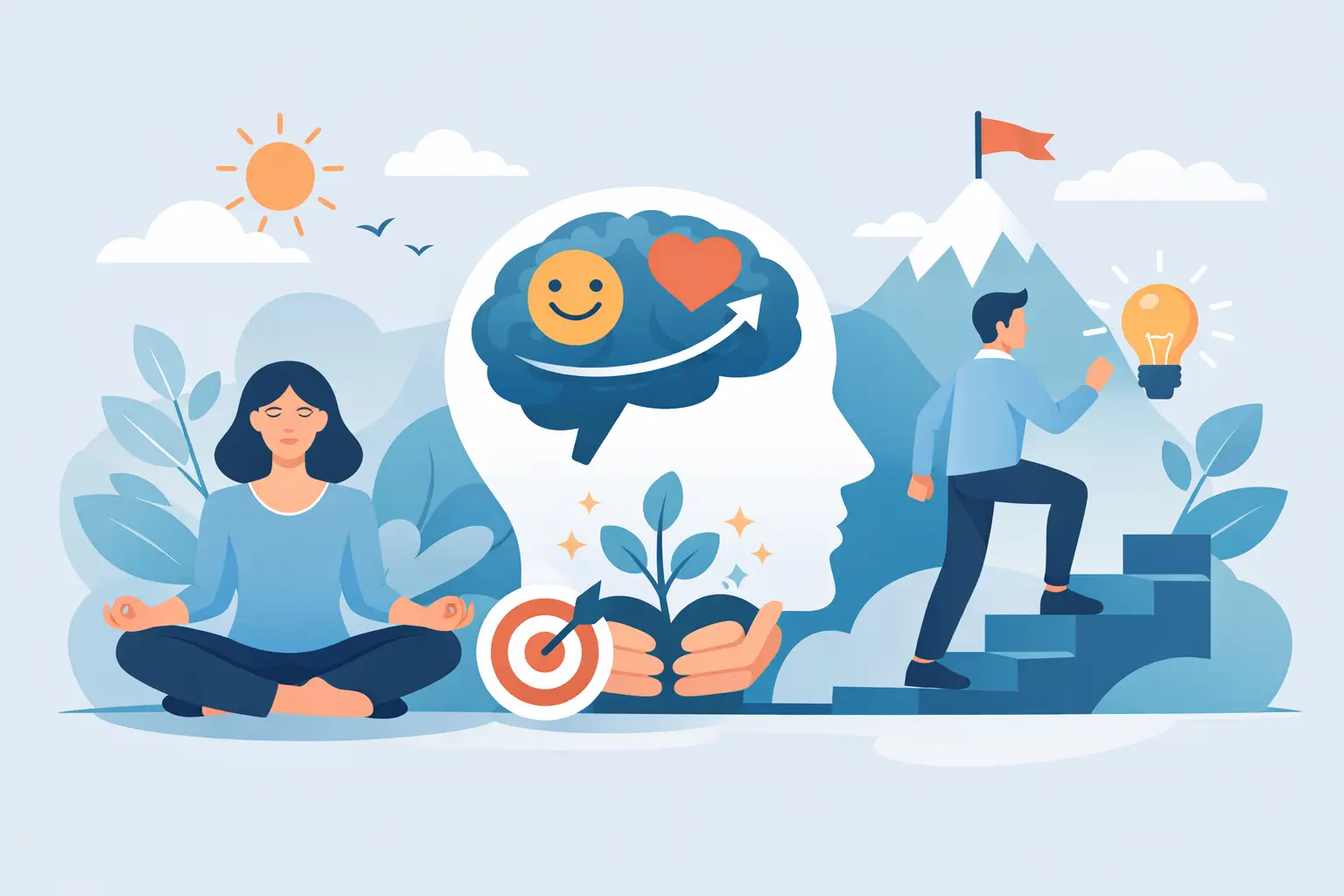
Your calendar can be full, your responsibilities can be real, and you can still feel strangely disconnected from your own life. That experience is not a personal failure. This positive psychology for beginners guide offers a grounded place to begin: not by pretending difficult feelings do not exist, but by learning the conditions that help people function, connect, and grow.
Positive psychology is often mistaken for a demand to be cheerful. It is not. It is the scientific study of well-being, strengths, meaningful relationships, and the factors that help individuals and communities thrive. For someone navigating work pressure, caregiving, uncertainty, or a season of feeling stuck, it provides practical questions: What is already supporting me? What matters most? Which small actions might make life feel more workable?
What Positive Psychology Is - and Is Not
Positive psychology examines more than symptoms and problems. Traditional psychology has made essential contributions by helping us understand distress, diagnosis, trauma, and treatment. Positive psychology adds another part of the picture: the study of what helps people experience purpose, engagement, connection, accomplishment, and positive emotion.
That does not mean pain should be reframed immediately or that every hard situation contains a lesson. Grief, anxiety, anger, and exhaustion often carry useful information. A psychologically healthy response may be to feel them, name them, seek support, and make changes where possible. Well-being is not a permanent good mood. It is the capacity to meet life with greater awareness, flexibility, and support.
It also helps to distinguish positive psychology from therapy. Its practices can complement mental health care, but they are not a substitute for therapy, medical treatment, or crisis support. If distress is persistent, intense, or affecting your safety and ability to function, professional care deserves to be part of your plan.
Positive Psychology for Beginners: Start With PERMA
One accessible framework is PERMA, developed by psychologist Martin Seligman. It describes five elements commonly associated with well-being: positive emotion, engagement, relationships, meaning, and accomplishment. Think of these as areas to notice, not a scorecard you must perfect.
Positive emotion
Positive emotion includes calm, gratitude, amusement, hope, affection, and relief. It is broader than happiness. You do not need to manufacture joy when you are having a difficult day. Instead, notice what creates even a brief shift: sunlight through a window, a favorite song, a warm meal, or five quiet minutes before the next demand.
Small positive experiences matter because they can widen your attention. When stress narrows the mind toward threat and urgency, moments of ease can make it easier to think creatively, connect with others, and recover after setbacks. The goal is not to erase stress. It is to make room for experiences that restore you.
Engagement
Engagement is the feeling of being absorbed in something that uses your attention and abilities. You may recognize it when time passes quickly while you are writing, solving a problem, cooking, learning, making music, or helping someone.
A useful question is: when do I feel most mentally present? Your answer does not need to involve a major passion or a career change. A 20-minute activity that asks for focused attention can be meaningful, especially when your days are fragmented by notifications and obligations.
Relationships
Human well-being is deeply relational. A supportive relationship does not need to be perfect or constantly available. It may be a friend who listens without trying to fix you, a colleague who makes work feel less isolating, or a family member with whom you can be honest.
Begin by considering the quality of connection, not the number of people in your life. One practical step is to send a specific message: “I was thinking about our conversation,” or “Would you like to take a walk this week?” Specificity makes connection easier to act on than a vague intention to be more social.
Meaning
Meaning comes from belonging to or serving something larger than immediate comfort. It can arise through parenting, faith, community, creative work, caring for a neighbor, protecting the environment, or doing your job with integrity.
Meaning is personal. It does not have to look impressive from the outside. If your current responsibilities feel repetitive, ask how they connect to a value you care about, such as reliability, learning, generosity, or justice. This is not about glorifying burnout. If a role is harming you, meaning may involve setting a boundary or choosing a different path.
Accomplishment
Accomplishment is the experience of making progress toward something that matters. It is not limited to promotions, awards, or large milestones. Keeping a medical appointment, completing a difficult email, practicing a skill, or following through on rest can all count.
Set goals that are clear and compassionate. A goal such as “be healthier” is hard to act on. “Walk for ten minutes after lunch three times this week” gives you a realistic starting point. Progress builds confidence when the task is small enough to begin and meaningful enough to sustain.
Use Strengths Instead of Fixating on Flaws
A strength is more than something you are good at. In positive psychology, strengths often refer to qualities that feel authentic and energizing when used, such as curiosity, kindness, perseverance, humor, fairness, gratitude, or love of learning.
Many adults are practiced at identifying weaknesses because school, work, and self-criticism train us to look for gaps. Looking at strengths is not denial. It is a more complete assessment. When you understand how you naturally contribute, you can approach challenges with more choice and less shame.
For one week, pay attention to moments when you feel useful, engaged, or quietly proud. Write down what you did and which quality you used. Perhaps you stayed patient during a difficult conversation, organized a complicated task, or asked a thoughtful question. Patterns will begin to emerge.
Then experiment with using one strength intentionally in a new setting. If curiosity is a strength, ask a better question in a meeting. If kindness is a strength, direct some of it toward yourself when you make a mistake. If perseverance is a strength, pair it with discernment so persistence does not become overwork.
Build a Practice That Fits Real Life
The most helpful well-being practice is usually the one you can return to. Grand plans often fail because they ignore energy, time, and the realities of a demanding week. Start with one small practice for seven days, then reflect on its effect.
You might write down three things that went reasonably well each evening and what contributed to them. This is not a demand to find silver linings. It trains attention to notice support, effort, and moments that might otherwise disappear in the rush.
You could also create a short “best possible next step” reflection. Rather than imagining a flawless future, ask what a slightly more aligned version of tomorrow would look like. Maybe it involves preparing lunch, taking a break before responding to a tense message, or asking for help.
Another option is a savoring practice. When something pleasant happens, pause for 20 seconds. Notice the details, your body’s response, and the thought that accompanies it. Savoring can feel awkward at first, particularly if you are used to moving quickly. That is part of why it can be useful.
Choose based on your needs. Gratitude practices may feel supportive when you are disconnected from what is good. Goal practices can help when you feel directionless. Connection practices may matter most when loneliness is the central strain. There is no universal routine that fits every person or season.
Measure Growth With Better Questions
Positive psychology is not about asking, “Am I happy enough?” every day. That question can become another pressure point. More useful questions are gentler and more specific: What gave me energy today? When did I act in line with my values? What made a hard moment slightly easier? Where do I need more support?
Keep your observations brief. A few sentences in a notebook or phone note can reveal what helps you feel steady over time. You may discover that rest improves your patience, that certain relationships leave you depleted, or that meaningful work requires firmer boundaries around your attention.
A structured space such as Live Like Jay can support this kind of ongoing reflection by helping you explore defined areas of well-being rather than treating personal growth as one overwhelming project. The point is not to optimize every part of yourself. It is to understand yourself well enough to make kinder, more informed choices.
Your first step can be very small: before the day ends, notice one moment when you showed up for your life in a way that mattered. Let that evidence count. Growth often begins not with a dramatic transformation, but with the decision to pay closer attention to what helps you become more fully yourself.