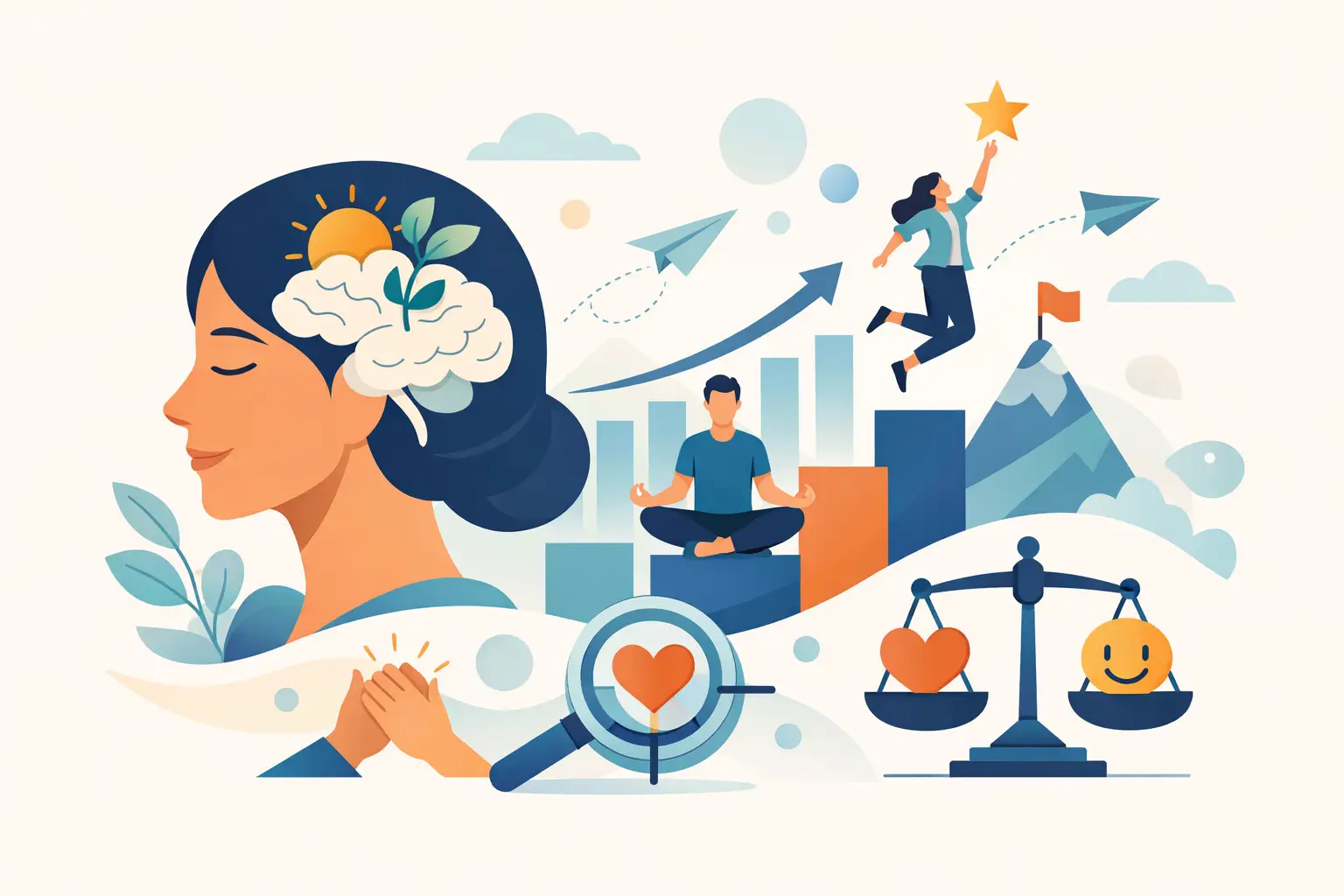
Some people can explain exactly why they feel stressed, flat, or unmotivated, yet still have no clear idea how to feel better. That gap is where the question what is positive psychology and why is it important becomes deeply practical. It is not about pretending life is easy. It is about understanding, with real psychological insight, what helps people function well, recover from difficulty, and build a life that feels meaningful.
Positive psychology is the scientific study of human flourishing. Rather than focusing only on mental illness, dysfunction, or distress, it also examines what helps people thrive. That includes positive emotions, yes, but also resilience, purpose, healthy relationships, engagement, strengths, hope, self-compassion, and the habits that support long-term wellbeing.
This matters because many people are not in crisis, but they are not fully well either. They are getting through the week, meeting responsibilities, and holding everything together on the outside while feeling disconnected on the inside. Positive psychology offers a framework for more than survival. It asks what supports a fuller, steadier, more intentional way of living.
What is positive psychology?
Positive psychology emerged as a formal field in the late 1990s, though its ideas reach back much further into philosophy, humanistic psychology, and wellbeing research. Its central shift was simple but significant. Psychology had become highly skilled at studying what goes wrong in human life, but had spent less time studying what goes right.
That did not mean ignoring pain or treating suffering as unimportant. It meant broadening the lens. Researchers began asking questions like: What helps people stay hopeful after setbacks? Why do some relationships strengthen wellbeing while others drain it? How do meaning, gratitude, strengths, and social connection affect mental health over time?
Positive psychology is often misunderstood as the science of happiness. Happiness is part of the picture, but the field is wider and more grounded than that. It looks at emotional wellbeing, but also at character strengths, motivation, resilience, values, and the conditions that allow people to grow. In other words, it is less about chasing constant positivity and more about building a life with depth, capacity, and direction.
What positive psychology is not
For many people, the phrase can sound suspiciously close to toxic positivity. That concern is understandable. If you have ever been told to just think positively while dealing with grief, burnout, or anxiety, you know how dismissive that can feel.
Positive psychology is not the denial of hardship. It does not ask you to smile through stress or reframe every painful experience before you have had a chance to feel it. In fact, much of the field depends on acknowledging reality accurately. Resilience is only meaningful because adversity exists. Hope matters because uncertainty is real.
It is also not a replacement for therapy, medical care, or support for serious mental health conditions. For someone dealing with depression, trauma, or panic disorder, positive psychology practices may help, but they are not always sufficient on their own. Context matters. Need matters. Sometimes the most psychologically healthy step is not adding a gratitude journal, but getting clinical support.
That balance is one reason the field remains useful. It can work alongside traditional mental health care rather than competing with it.
Why is positive psychology important in everyday life?
The short answer is that it gives people a more complete understanding of wellbeing. If we only define mental health as the absence of illness, we miss a large part of what people are actually seeking. Most people do not simply want fewer bad days. They want steadier energy, better relationships, more self-trust, and a stronger sense that their life is going somewhere.
Positive psychology helps make those goals more concrete. It translates abstract ideas like fulfillment or resilience into patterns, behaviors, and capacities that can be studied and practiced. That is important because vague encouragement rarely changes much. Clear psychological frameworks can.
There is also a preventive value. Building emotional regulation, social connection, optimism, and meaning before a crisis can make it easier to navigate one when it arrives. This does not make people immune to loss or stress, but it can increase their ability to respond without collapsing under the weight of it.
For adults managing work pressure, caregiving demands, identity shifts, or the constant noise of modern life, that matters. Wellbeing is not built in a single breakthrough moment. More often, it is shaped through small repeatable practices and a better understanding of what supports human flourishing over time.
The core ideas behind positive psychology
One of the most helpful contributions of the field is that it organizes wellbeing into areas people can actually work on. Different models exist, but most include some version of positive emotion, engagement, relationships, meaning, and accomplishment.
Positive emotion refers to experiences like gratitude, joy, calm, hope, and interest. These emotions are valuable, but positive psychology does not treat them as the whole goal. A person can feel good in the moment and still feel unfulfilled overall.
Engagement points to being absorbed in what you are doing. This might happen during creative work, learning, exercise, or a meaningful conversation. It is the opposite of emotional numbness and constant distraction.
Relationships matter because wellbeing is rarely built in isolation. Supportive connections increase resilience, regulate stress, and give life a sense of belonging. Meaning adds another layer. People tend to cope better when they feel connected to something larger than immediate convenience or productivity.
Accomplishment is also part of the picture, though not in a perfectionistic sense. Progress, competence, and the feeling that your efforts matter can strengthen confidence and motivation.
Another core concept is strengths. Positive psychology pays attention to what is already working in a person - not to flatter them, but to help them use their natural capacities more intentionally. Someone with strong curiosity may benefit from learning-based challenges. Someone with kindness as a signature strength may thrive when service and connection are part of daily life.
Why positive psychology matters when life feels heavy
When people feel stuck, they often assume the answer is fixing what is wrong with them. Sometimes there are things that need healing, and that should not be minimized. But many people also need help identifying what is right with them and how to build from it.
This is one reason positive psychology can feel so relieving. It does not begin with the assumption that you are broken. It begins with the belief that growth is possible, even when life is complicated.
That does not mean growth is quick. Some practices work better for some people than others. Gratitude can be powerful for one person and feel forced for another. Goal setting can create momentum for some and pressure for others. The field is evidence-based, but application is personal. What helps depends on personality, life stage, stress load, culture, and current mental health.
Still, the broader message remains steady. Wellbeing is not just luck. It can be supported through intentional habits, reflective awareness, and environments that make psychological health more likely.
What is positive psychology and why is it important for long-term growth?
It is important because it shifts personal development away from vague inspiration and toward something more disciplined. Instead of asking only, How do I feel better right now, it also asks, What helps me become more resilient, connected, and purposeful over time?
That longer view matters. Quick motivation often fades because it is built on emotion alone. Positive psychology encourages practices that are sustainable even when motivation is low. That might include noticing strengths, protecting restorative routines, deepening relationships, or aligning daily choices with personal values.
For a platform like Live Like Jay, this perspective is especially relevant. Personal growth becomes less about chasing a better version of yourself and more about applying the science of Positive Psychology in ways that support a calmer, stronger, more meaningful life.
Bringing it into real life
You do not need to change everything at once to benefit from positive psychology. Often, the most effective starting point is simply paying attention to what gives you energy, what drains you, where you feel most like yourself, and which relationships leave you steadier afterward.
From there, change becomes more specific. You might practice self-compassion instead of harsh self-correction. You might build more moments of absorption into your week. You might stop treating rest as a reward and start treating it as part of psychological functioning.
None of this removes pain from life. It does something quieter and more useful. It helps you develop the inner and outer conditions that make wellbeing more possible.
If you have been moving through life feeling functional but not fully connected, positive psychology offers a different question to live with: not just how to get through, but how to grow well while you are here.