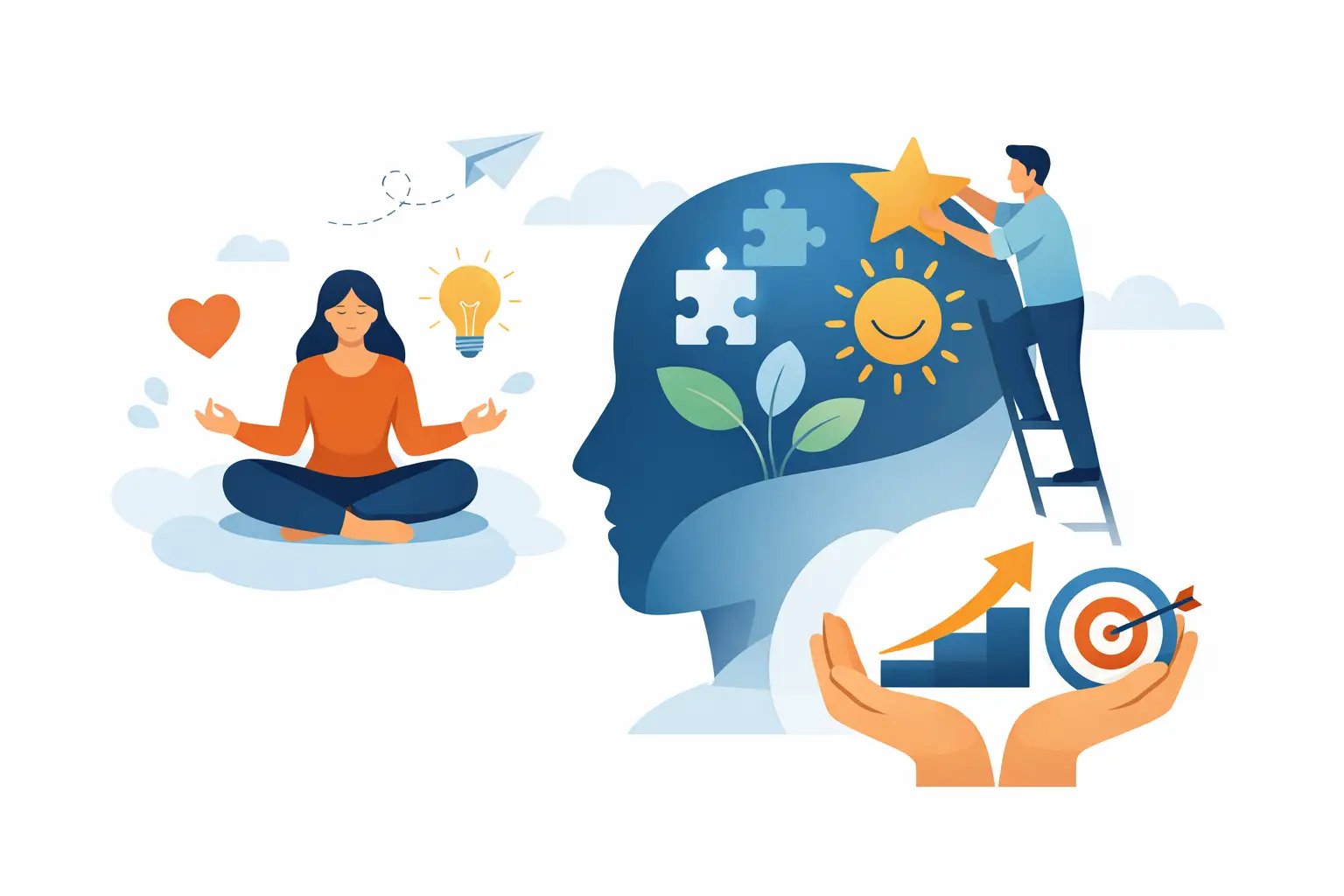
You can read ten motivational quotes before breakfast and still feel anxious, flat, or stuck by lunch. That gap between inspiration and real change is exactly where the question what is positive psychology interventions becomes useful. These interventions are not wishful thinking or forced positivity. They are structured, evidence-based practices designed to strengthen wellbeing, support resilience, and help people function better in everyday life.
Positive psychology interventions come from the field of Positive Psychology, which studies what helps people thrive, not just what helps them reduce distress. That distinction matters. Traditional mental health approaches often focus on symptoms, problems, and treatment. Positive psychology does not replace that work. Instead, it adds another dimension by asking what builds meaning, connection, hope, strengths, and engagement.
For many adults, that shift feels deeply relevant. You may not be in crisis, yet you still feel emotionally drained, disconnected from yourself, or unsure how to move forward. In those moments, wellbeing needs more than encouragement. It needs direction.
What is positive psychology interventions in simple terms?
A positive psychology intervention is a deliberate activity or practice that aims to improve wellbeing by changing how you think, feel, or behave. The key word is deliberate. These are not vague ideas about being happier. They are specific exercises grounded in research.
Examples include practicing gratitude, identifying and using personal strengths, performing acts of kindness, savoring positive moments, building optimism, and reflecting on meaning or purpose. Some interventions are brief and simple. Others are deeper and work best over time. What they share is intention. They are designed to create measurable psychological benefits.
That said, the phrase can sound more technical than it needs to. In everyday life, a positive psychology intervention might look like writing down three things that went well and why, having a weekly strengths check-in, or learning how to respond more constructively to your own inner criticism. The science matters, but the goal is practical: helping people live with more steadiness, vitality, and purpose.
What positive psychology interventions are not
It helps to clear up a common misunderstanding. Positive psychology interventions are not about pretending everything is fine. They do not ask you to ignore grief, minimize stress, or smile through burnout. In fact, used poorly, even helpful tools can become another form of pressure.
If someone is overwhelmed and hears, just be grateful, the result may be shame rather than relief. Real wellbeing work makes room for the full emotional picture. Gratitude can be healing, but not when it is used to silence pain. Optimism can be powerful, but not when it turns into denial.
This is where a science-informed approach matters. The best interventions are not about avoiding difficult feelings. They are about building inner resources so that difficult feelings become more manageable and less defining.
Why these interventions work
Positive psychology interventions work because they gently shift attention, interpretation, and behavior in ways that support healthier mental patterns. Human minds are naturally biased toward threat and problems. That bias has survival value, but it can also make modern life feel heavy and narrowed.
A well-designed intervention helps balance that tendency. Gratitude broadens attention beyond what is missing. Strengths use increases confidence through action, not fantasy. Acts of kindness deepen connection and often reduce self-focused rumination. Savoring helps the nervous system register safety and pleasure instead of letting good moments pass unnoticed.
Over time, small practices can influence larger patterns. People may begin to notice more agency, stronger relationships, better emotional regulation, and a clearer sense of what matters. The change is usually gradual. That is one reason these tools tend to be more sustainable than dramatic self-improvement promises.
Common types of positive psychology interventions
Some interventions are better known than others, but a few categories show up consistently in research and practice.
Gratitude interventions help people recognize what is meaningful, supportive, or life-giving in the present. This might involve journaling, writing a gratitude letter, or simply naming one thing each day that felt nourishing.
Strengths-based interventions focus on identifying what is best in you and using it more intentionally. That does not mean only doing what comes easily. It means understanding your natural capacities, such as curiosity, perseverance, kindness, or perspective, and applying them to real challenges.
Kindness interventions encourage actions that benefit others. These can be small and ordinary. A thoughtful message, practical help, or a generous act can improve wellbeing for both the giver and receiver.
Savoring interventions build the ability to notice and absorb positive experiences. Many people move through good moments too quickly to feel them. Savoring teaches attention, presence, and emotional registration.
Optimism and hope interventions often involve reflecting on best possible futures, reframing setbacks, or developing more constructive ways of interpreting experience. These are useful, but they require nuance. If a person is in deep distress, future-focused exercises may need careful pacing.
Meaning-centered interventions support reflection on values, purpose, and identity. These can be especially important during transitions, loss, or periods of feeling unanchored.
Who benefits from positive psychology interventions?
A lot of people can benefit, but not always in the same way or for the same reason. Someone managing chronic stress may use these interventions to restore balance and emotional energy. A high-achieving professional may need them to reconnect with meaning rather than performance. A student might use them to build confidence and resilience. A caregiver may need simple practices that bring moments of steadiness back into a demanding routine.
The benefits also depend on timing. If someone is severely depressed, traumatized, or in acute crisis, positive psychology interventions may be supportive, but they are not always sufficient on their own. In those cases, they work best alongside therapy, medical care, or other forms of structured support.
This is one of the most important trade-offs to understand. These tools can be powerful, but they are not universal fixes. They are part of a broader wellbeing picture.
How to use positive psychology interventions well
The biggest mistake is trying to do too much, too quickly, because the practice sounds simple. Simple does not mean shallow. The most effective approach is usually to choose one intervention that matches your current need.
If you feel negative and mentally overloaded, a gratitude practice may help rebalance attention. If you feel lost or flat, strengths or meaning-based work may be more useful. If you feel isolated, kindness and connection-focused practices may offer more immediate relief.
It also helps to lower the bar. A two-minute reflection done consistently often works better than a perfect routine you abandon after four days. The point is not performance. The point is integration.
Another useful principle is honesty. If a practice feels irritating, forced, or emotionally mismatched, pause and adjust. Not every intervention works for every person at every moment. That is not failure. It is feedback.
At Live Like Jay, this kind of structured self-development matters because growth tends to be more effective when it is organized, psychologically grounded, and responsive to real life rather than idealized routines.
What the research suggests and where caution is needed
Research on positive psychology interventions is promising. Many studies show improvements in wellbeing, life satisfaction, optimism, and depressive symptoms, especially when practices are repeated over time. But results vary.
Some interventions produce modest gains rather than dramatic transformation. Some work better for motivated participants than for people who feel emotionally exhausted. Some are more helpful when guided rather than done alone. Delivery matters too. A reflective journaling exercise may land differently than a generic app prompt.
This does not weaken the field. It strengthens it by keeping expectations realistic. Wellbeing is shaped by personality, context, stress load, relationships, health, and environment. No intervention exists outside those realities.
That is why compassionate discipline is often the right mindset. You do not need to force yourself into positivity. You do need to practice in a way that is steady, personalized, and anchored in evidence.
A better way to think about progress
If you are asking what is positive psychology interventions, the most useful answer may be this: they are ways of training your mind and behavior toward wellbeing with intention, not wishful thinking. They help you create conditions where resilience, meaning, and emotional balance are more likely to grow.
Some days the effect will be subtle. You may notice a little more patience, a little less self-criticism, a little more awareness of what is going right. Those shifts can seem small, but they often mark the beginning of something deeper. A steadier relationship with yourself is usually built that way - one practice, one reflection, one honest moment at a time.
You do not need to become a different person to benefit from this work. You only need a method that respects both your humanity and your capacity to grow.