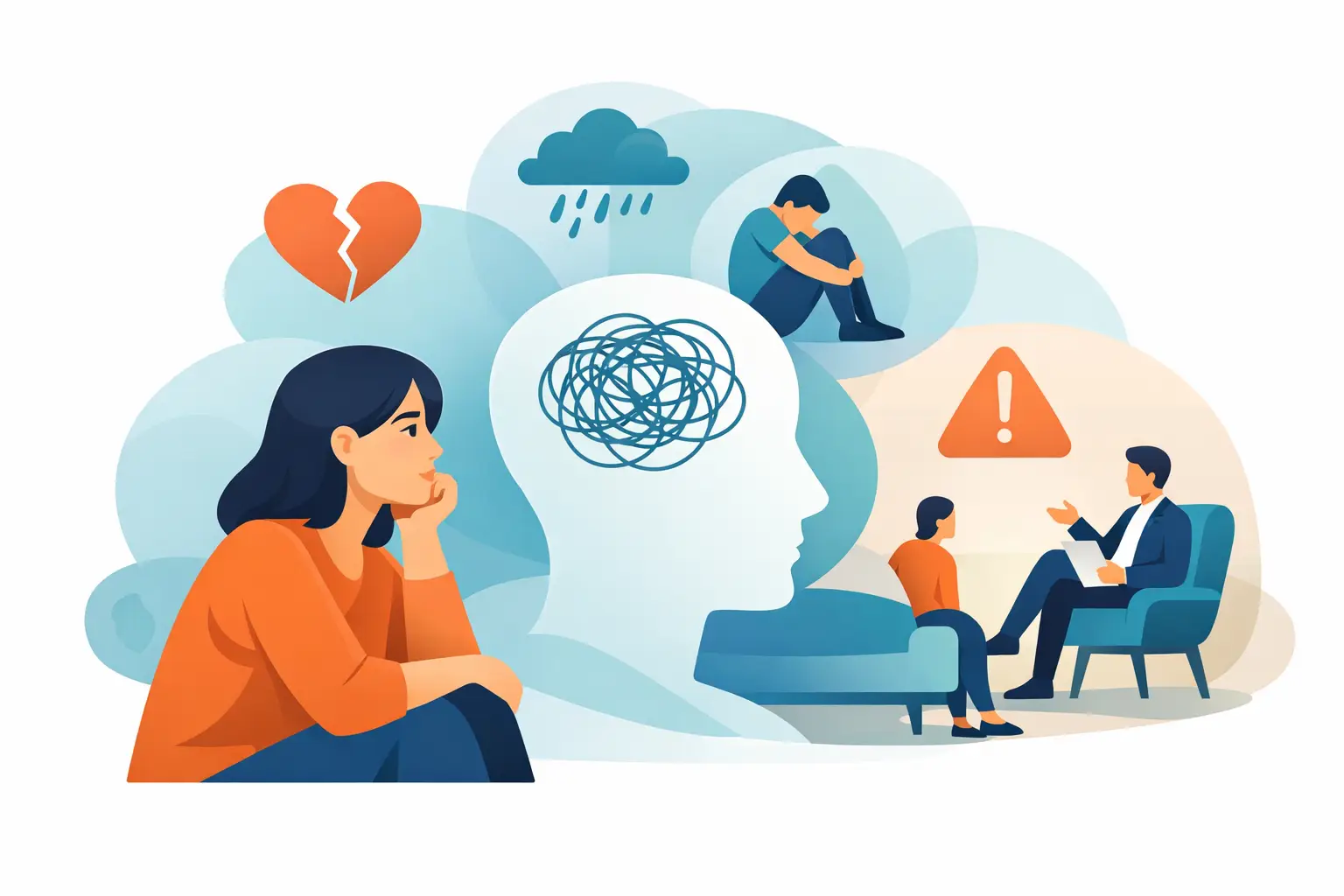
A difficult meeting, a sleepless week, or a period of grief does not automatically mean something is wrong with you. Human beings are built to respond to stress, loss, uncertainty, and change. But if you keep asking yourself, when should I seek therapy, the question itself may be worth honoring. Often, it signals that part of you is looking for more support, understanding, or room to breathe.
Therapy is not reserved for a crisis, a diagnosis, or the moment life becomes unmanageable. It can be a structured place to make sense of what you are carrying, strengthen skills for navigating it, and reconnect with the life you want to live. The right time is less about meeting a dramatic threshold and more about noticing whether your current ways of coping are helping you move forward.
When should I seek therapy? Look at impact, not labels
You do not need to prove that your experience is "bad enough" to deserve care. A useful question is: How much is this affecting my daily life, relationships, health, or sense of self?
Stress can be temporary and still uncomfortable. Therapy becomes especially worth considering when distress is persistent, intensifying, or beginning to narrow your world. Perhaps you are avoiding people or responsibilities that once felt manageable. Maybe your concentration has slipped, your sleep is disrupted, or small setbacks now feel overwhelming. These changes do not define you, but they can offer meaningful information.
It also helps to notice the effort required to appear okay. Some people continue performing well at work, caring for others, and meeting obligations while privately feeling depleted, disconnected, or anxious. Functioning is not the same as flourishing. If maintaining your life takes nearly all your energy, support may help you build a more sustainable way forward.
Signs that professional support could help
There is no single checklist that determines whether therapy is necessary. Still, certain patterns often suggest that speaking with a licensed mental health professional could be helpful.
Your emotions feel difficult to regulate
You may feel anxious most days, irritable with people you love, numb when you expect to feel present, or caught in sadness that does not lift. Strong feelings are not failures. They are part of being human. Yet when they feel unpredictable, constant, or out of proportion to what is happening, therapy can offer tools for understanding triggers and responding with greater choice.
The same patterns keep repeating
Maybe you repeatedly overwork until you burn out, withdraw when relationships become close, say yes when you mean no, or criticize yourself after every mistake. Repetition is not a character flaw. It often reflects learned protective strategies that once made sense but no longer serve you.
Therapy can help you explore these patterns with curiosity rather than shame. That perspective matters. Sustainable growth usually comes from understanding why a pattern developed, then practicing alternatives in small, realistic ways.
A life transition has unsettled you
Not all reasons for therapy are painful in an obvious way. A promotion, becoming a parent, moving cities, ending school, changing careers, or entering a new relationship can all shift your identity and routines. Even wanted change asks us to adapt.
A therapist can provide a steady place to process uncertainty, clarify what matters to you, and make decisions aligned with your values. This kind of support can be particularly valuable when everyone around you expects you to feel only grateful or excited.
Your relationships are under strain
Conflict, loneliness, resentment, difficulty trusting others, or feeling unseen in a relationship can affect every other area of life. Therapy is not about deciding who is right. It can help you identify needs, communicate boundaries, recognize unhelpful interaction cycles, and better understand your emotional responses.
Individual therapy may be useful even if the relationship concern involves another person who is not ready to participate. Couples or family therapy can also be appropriate when everyone involved is willing and safety is not a concern.
You are using coping habits that create more harm
Many coping strategies start as attempts to find relief. Alcohol, drugs, compulsive spending, overeating, restrictive eating, gambling, excessive scrolling, overworking, or self-isolation may numb discomfort in the short term while creating larger problems over time.
If a behavior feels increasingly hard to control, secretive, or necessary to get through the day, reaching out early can make a real difference. You do not have to wait for consequences to become severe.
Therapy is not only for fixing a problem
Positive Psychology recognizes that wellbeing is more than the absence of distress. It also includes meaning, supportive relationships, engagement, strengths, and the capacity to experience positive emotion. Therapy can support mental health challenges, but it can also deepen self-knowledge and help you live more intentionally.
You might seek therapy because you feel stuck rather than acutely unwell. You may want to understand your values before making a major choice, develop confidence in difficult conversations, process an old experience that still shapes you, or create healthier habits without relying on harsh self-discipline.
This is one reason the question is not simply, "Am I struggling enough?" A more constructive question may be, "Would guided support help me become more present, capable, and connected?" If the answer is possibly, an initial consultation can help you decide.
What therapy can and cannot do
Therapy offers a confidential, collaborative relationship with a trained professional. Depending on the approach, you may learn to notice thought patterns, work with emotions in the body, process past experiences, build communication skills, or take values-based action in the present. Good therapy is not a script imposed on your life. It is a process shaped around your goals, history, preferences, and pace.
It is also not instant relief. Some sessions can bring clarity and comfort; others may surface feelings you have avoided for a long time. Progress is rarely linear. The goal is not to feel positive all the time, but to develop greater flexibility and self-understanding when life is difficult.
Therapy cannot make every decision for you or remove all uncertainty. A therapist should not pressure you to adopt their worldview. Instead, they should help you access your own insight, recognize your options, and make choices that are safe and consistent with your values.
How to take the first step without overthinking it
Beginning can feel vulnerable, particularly if you are used to handling things alone. You do not need to have a polished explanation of why you are seeking help. A simple starting point is enough: "I have not felt like myself lately," "I am overwhelmed," or "I keep repeating a pattern I want to change."
When looking for a therapist, consider practical fit alongside clinical fit. Check their licensing, areas of experience, approach, availability, cost, and whether they offer telehealth. If you have a specific concern, such as trauma, grief, substance use, eating concerns, or a major life transition, relevant experience can be valuable.
The relationship matters, too. After an initial session or two, ask yourself whether you feel respected, heard, and able to speak honestly. You do not need immediate comfort, especially when discussing sensitive material, but you should feel emotionally safe and not judged. If the fit is not right, it is reasonable to try someone else. Finding the right support can take time, and that does not mean therapy is not for you.
When to seek urgent help
Some situations call for immediate support rather than waiting for a therapy appointment. If you are thinking about harming yourself or someone else, feel unable to stay safe, are experiencing a mental health emergency, or are in danger from another person, contact emergency services, call or text 988 in the United States for the Suicide & Crisis Lifeline, or go to the nearest emergency room. If possible, tell someone you trust and avoid being alone.
You deserve support before you reach a breaking point. Choosing therapy is not an admission that you have failed to cope. It can be a grounded act of self-respect: a decision to meet your inner life with the same care and attention you bring to the people and responsibilities that matter to you.