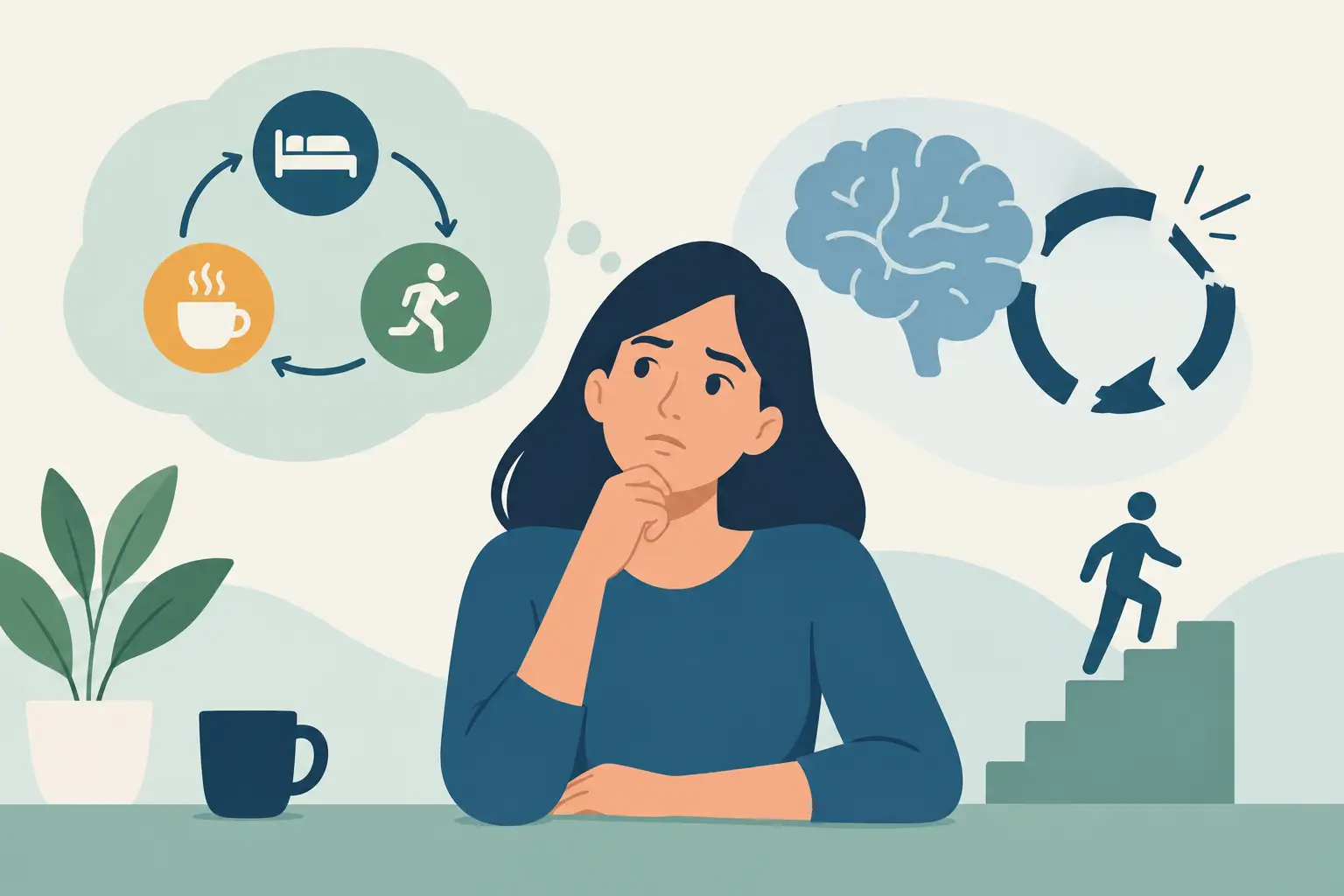
You set the alarm earlier, buy the journal, prepare the healthy groceries, or promise yourself that this time you will take a proper break before burnout arrives. Then a demanding week, poor sleep, travel, or one unexpectedly difficult day interrupts the plan. If you are asking, why do habits not stick, the answer is rarely that you lack discipline. More often, the habit was asked to survive a real life it was not designed for.
Positive Psychology offers a more compassionate and useful starting point. Sustainable change is not about forcing yourself into a new identity through willpower alone. It is about shaping conditions that make a meaningful action possible, even when your energy, mood, and schedule are less than ideal.
Why Do Habits Not Stick, Even When You Care?
Wanting a habit and being able to repeat it are different psychological tasks. Motivation can initiate change, but it naturally fluctuates. It rises when a new goal feels exciting and falls when the behavior becomes inconvenient, boring, or emotionally loaded.
Many people interpret that drop as proof they are not committed enough. But motivation is not a stable personality trait. It is influenced by stress, sleep, competing demands, confidence, and whether the reward feels immediate. A walk may support your long-term mental health, but answering an urgent message can feel more pressing in the moment. The brain tends to prioritize what is immediate, familiar, and easy to access.
This is why ambitious routines often collapse after a strong start. They rely on a temporary surge of enthusiasm instead of a structure that can carry you when enthusiasm is low. The goal was not wrong. The conditions around it were simply too fragile.
The Habit May Be Too Big for the Life You Have
A common mistake is designing habits for an ideal week. You plan to exercise for an hour five days a week, meditate for twenty minutes every morning, cook every meal from scratch, and read before bed. Each behavior may be worthwhile. Together, they may require more time, attention, and recovery capacity than your current life allows.
When a habit is too demanding, missing one day can trigger an all-or-nothing response: “I have already failed, so there is no point continuing.” This is not laziness. It is a predictable response to a standard that leaves little room for being human.
A smaller version of the habit may look almost unimpressive at first. Two minutes of stretching. One sentence in a journal. Putting fruit where you can see it. Reading one page. Yet small actions matter because they reduce the barrier to starting. They also give you repeated evidence that you are someone who returns to your intentions.
The trade-off is that small habits can feel less dramatic. They do not offer the emotional rush of a total reset. But they are more likely to fit into ordinary life, which is where lasting change is actually built.
Your Environment Is Often Stronger Than Your Intentions
Habits do not happen in a vacuum. They are shaped by cues: the time of day, what is visible, who is around you, what happens immediately before the action, and how much effort it takes to begin.
Consider the difference between intending to practice gratitude sometime during the day and leaving your journal beside the coffee maker. The intention is the same, but the second option has a clear cue and fewer decisions. Or consider trying to stop scrolling at night while your phone is charging beside your pillow. The behavior you want to change remains the easiest available option.
This is not a moral failure. Human behavior is responsive to friction. We tend to repeat actions that are simple, familiar, and cued by our environment. Rather than asking yourself to resist every unhelpful prompt, adjust the setting where you can. Make the desired behavior more visible and convenient. Add a little distance to the behavior you want less of.
That might mean laying out walking shoes before work, keeping a water bottle on your desk, or setting a book on your pillow before you leave the bedroom in the morning. These choices can seem minor, but they lower the number of decisions your future self has to make.
The Reward Is Too Far Away
Many meaningful habits are difficult because their benefits are delayed. You do not feel emotionally resilient after one therapy exercise. A single early bedtime may not transform your energy. Saving a modest amount of money does not immediately remove financial worry.
Meanwhile, the alternatives often offer an instant payoff. Skipping the workout gives you more time. Ordering takeout removes a decision. Watching another episode creates quick relief from a stressful day. These choices may be understandable, even necessary at times. The issue is not that short-term comfort is bad. It is that a new habit needs some form of immediate reinforcement if it is going to compete.
Try pairing the behavior with a reward you genuinely enjoy. Listen to a favorite podcast only during your walk. Mark each completed practice on a calendar. Notice the feeling of relief after you clear one small task. You are not bribing yourself. You are helping your brain register that the action has value now, not only in a distant future.
Stress Changes What You Can Sustain
Under stress, people often set stricter rules for themselves: exercise more, eat perfectly, be productive, wake up earlier, and stop feeling overwhelmed. Yet stress narrows attention and drains executive function, the mental capacity used for planning, inhibition, and flexible decision-making.
This means the version of a habit that worked during a calm season may not work during grief, caregiving, illness, a demanding project, or a period of uncertainty. Adapting the habit is not lowering your standards. It is practicing psychological flexibility.
Ask, “What is the smallest caring version of this habit I can do today?” On a difficult day, movement might mean standing outside for five minutes. Connection might mean sending one honest message. Reflection might mean naming one feeling instead of completing a full journal entry. A habit that can shrink is a habit that can survive.
When Habits Do Not Stick, Shame Makes It Harder
Shame often enters the cycle quietly. You miss a few days, become disappointed in yourself, and avoid the habit because it reminds you of the gap between your hopes and your actions. Then avoidance creates more distance, reinforcing the belief that you cannot follow through.
Self-compassion is not an excuse to abandon change. Research in Positive Psychology and related fields consistently points to the value of responding to setbacks with understanding rather than harsh self-judgment. When you see a lapse as information, you can learn from it. When you see it as evidence of personal failure, you are more likely to give up.
Instead of saying, “I always ruin my routines,” try a more accurate question: “What made this hard to do this week?” Perhaps the cue disappeared, the habit was too large, your evenings became overloaded, or you needed more rest. Specific answers create options. Global criticism does not.
Build a Habit Around a Clear Need
A habit lasts more easily when it is connected to something you genuinely value. “I should meditate” is usually too vague to carry you through resistance. “I want a calmer transition between work and home” gives the practice a personal purpose.
Choose one behavior that supports a need in your life right now. Make it concrete enough to recognize, small enough to repeat, and tied to an existing cue. For example: after I close my laptop, I will stand by the window and take three slow breaths. After I brush my teeth, I will write one line about what went well. After lunch, I will walk to the end of the block.
Then plan for the moment you will miss it. Decide in advance that missing once is normal, and returning at the next available opportunity is the practice. Consistency is not a perfect streak. It is the ability to begin again without turning one interruption into a verdict about who you are.
Your habits do not need to prove that you are disciplined, optimized, or worthy. Let them become small forms of support: practical promises that meet you where you are and gently help you move toward the life you want to live.