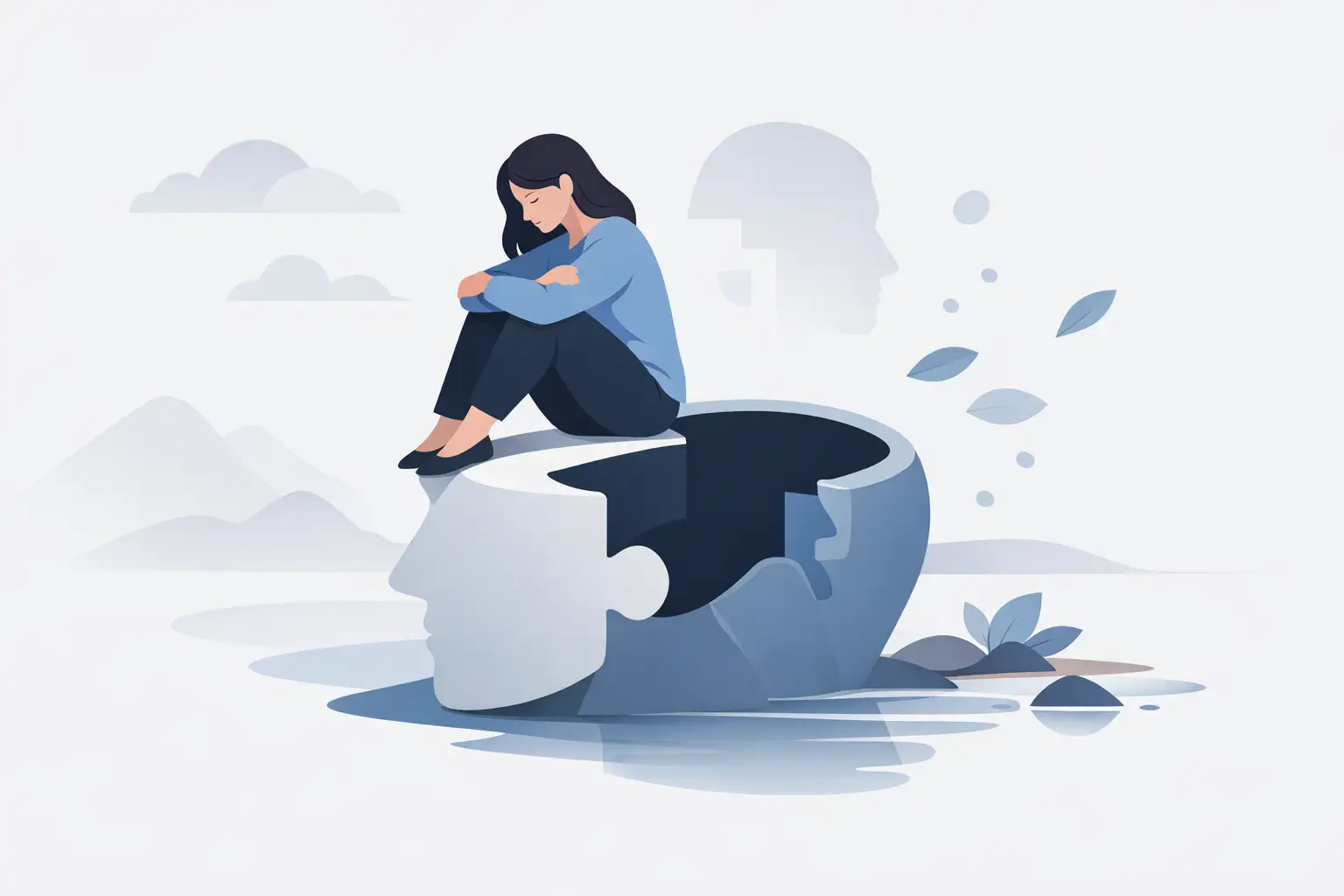
A message arrives that should make you happy, a difficult conversation ends, or something genuinely painful happens - and you feel almost nothing. If you have been asking, why do I feel emotionally numb, that absence of feeling can be unsettling in its own right. You may worry that you are becoming cold, ungrateful, or disconnected from who you are.
Emotional numbness is not a character flaw. Often, it is a protective response: your mind and body may be reducing access to intense feelings because they have been under too much strain for too long. Understanding the signal with compassion is a more useful starting point than forcing yourself to feel better.
What emotional numbness can feel like
Emotional numbness does not look the same for everyone. For some people, it feels like moving through the day on autopilot. You complete work, answer messages, care for other people, and meet obligations, yet feel distant from your own experience.
For others, numbness is less about feeling nothing and more about feeling muted. Joy does not land fully. Sadness seems out of reach. You may know intellectually that something matters, while noticing little emotional response. Some people also describe detachment from their body, relationships, memories, or surroundings.
This can be confusing because numbness may sit beside other symptoms. You might still be exhausted, irritable, anxious, unable to concentrate, or unusually withdrawn. Emotional numbness is a description of an experience, not a diagnosis. Its meaning depends on what else is happening in your life, your history, and how long it has lasted.
Why do I feel emotionally numb? Common explanations
Our emotional systems are designed to help us respond to what matters. But when demands exceed our capacity, the system may shift from feeling everything intensely to turning the volume down. This is sometimes called a shutdown or freeze response.
Chronic stress and burnout
A demanding job, financial uncertainty, caregiving, academic pressure, conflict at home, or the ongoing effort of holding everything together can gradually drain emotional resources. When there is little space for rest or recovery, numbness can become a form of conservation.
Burnout is not always dramatic. It can arrive as a quiet loss of interest in things that used to make you feel engaged. The person who once cared deeply may begin to feel indifferent, not because their values disappeared, but because their capacity is depleted.
Grief, trauma, and overwhelming events
After a loss, frightening event, violation, accident, or prolonged period of instability, emotional detachment can help a person get through the immediate moment. The nervous system may decide that fully processing what happened is too much right now.
This response is not limited to events other people would label severe. Repeated criticism, a controlling relationship, chronic loneliness, discrimination, or years of feeling unsafe can also have a cumulative effect. Comparing your experience with someone else's can make it harder to recognize that your own system has been carrying a heavy load.
Depression and anxiety
Depression is often associated with sadness, but some people experience it primarily as emptiness, reduced pleasure, and emotional flatness. Anxiety can also lead to numbness. When your mind is constantly scanning for what could go wrong, there may be little room left for curiosity, joy, or connection.
If numbness comes with changes in sleep, appetite, energy, motivation, concentration, or your ability to function, it is worth discussing with a qualified mental health professional. These details help create a clearer picture of what support may be needed.
Emotional avoidance that once helped
Many people learned, consciously or unconsciously, that certain feelings were unsafe, inconvenient, or unwelcome. Perhaps you were expected to stay composed, solve problems quickly, or care for everyone else before yourself. Avoiding feelings may have been an intelligent adaptation at the time.
The trade-off is that we cannot selectively numb only pain. When we push away fear, anger, grief, or shame, we may also lose access to pleasure, tenderness, meaning, and aliveness. This is not a reason to judge yourself. It is an invitation to build safer ways of relating to emotions now.
Physical health, substances, and medication
Sleep deprivation, hormonal changes, chronic pain, illness, alcohol or substance use, and some medications can influence mood and emotional range. If numbness started after a medication change, do not stop taking it on your own. Speak with the prescribing clinician about what you are noticing.
A medical professional can also help rule out physical contributors. Psychological wellbeing and physical health affect each other continuously, and a thoughtful approach makes room for both.
How to reconnect without forcing the process
Trying to manufacture a big emotional breakthrough can create more pressure. Reconnection is usually quieter and more gradual. The aim is not to feel every feeling at once. It is to help your nervous system experience enough safety, rest, and support that feelings can return at a manageable pace.
Start with the body
When you feel detached, begin with what is concrete. Notice your feet against the floor, the temperature of a cup in your hands, or five things you can see around you. A short walk outside, a shower, slow breathing, regular meals, and consistent sleep may sound basic, but they provide the physical conditions emotional regulation depends on.
Ask a simple question: What does my body need in the next ten minutes? The answer may be water, food, fresh air, movement, quiet, or permission to stop performing for a moment.
Name the experience with precision
Instead of telling yourself, “I feel nothing,” try adding detail. Do you feel blank, distant, tired, guarded, restless, heavy, or disconnected? Are there moments when the numbness eases, such as when you are alone, with a trusted person, or away from work?
This is not overthinking. Emotional granularity, the ability to identify feelings more precisely, can make them easier to understand and respond to. A brief daily check-in can be enough: What happened? What did I notice in my body? What emotion might be underneath the numbness?
Choose low-pressure sources of meaning
Positive Psychology is not about insisting on positivity when life is difficult. It examines the conditions that support wellbeing, including connection, meaning, engagement, and strengths. When you feel numb, choose small actions in these areas rather than waiting to feel motivated first.
Send one honest message to someone safe. Spend fifteen minutes on an activity you once found absorbing. Help someone in a contained way. Make something with your hands. Revisit a place that has felt grounding. These actions may not produce an immediate emotional shift, but they can gently remind your system that life contains more than survival.
Share what is real with someone trustworthy
Numbness often grows in isolation. You do not need to explain your entire history to begin receiving support. A sentence such as, “I have been feeling disconnected from myself lately, and I could use someone to listen,” is enough.
A therapist can be especially helpful if numbness is persistent, linked to trauma, affecting relationships or work, or leaving you unsure how to cope. Different approaches suit different people, so it is reasonable to seek a practitioner whose style feels safe, respectful, and practical.
When emotional numbness needs urgent support
Seek immediate help if you are thinking about harming yourself or someone else, feel unable to keep yourself safe, are using substances in dangerous ways, or are experiencing severe disconnection from reality. In the United States, call or text 988 to reach the Suicide & Crisis Lifeline, call 911 in an emergency, or go to the nearest emergency room. If you are elsewhere, contact local emergency services or a crisis resource in your area.
You do not have to wait until things become unbearable to ask for help. Early support can reduce the burden of carrying this alone.
Emotional numbness may be your inner system saying, with very little language, that something needs care. Meet that message with patience. Feeling connected again is rarely a matter of pushing harder - it begins with creating enough safety to listen to yourself.